The Only Non-Toxic Cleaning Products We Actually Use (And Why)
Disclosure: This post contains affiliate links, which means I may earn a small commission if you purchase through my links — at no extra cost to you. I only recommend products we personally use and trust in our own home.
Not long ago, our cleaning cabinet looked a lot like most people’s. Tide. Dawn. Lysol. Febreze. Whatever was on sale, smelled clean, and got the job done.
The shift toward a lower-toxin home didn’t happen overnight, and it wasn’t rooted in fear. It started with a few nagging questions: Why did certain cleaners give me a headache? Why did our laundry room smell like a chemical factory? Why did my skin react after using some products and not others?
As a homeschooling mom who’s home with my kids most of the day, I started paying more attention. Not in a panic-every-label kind of way — but in a quiet, deliberate way. And the more I looked, the more I wanted better defaults.
This post is what stayed after that process. Not a perfect list. Not a sponsored roundup. Just the products that earned a permanent place under our sinks, in our laundry room, and in our daily routine — and the honest reasons why.
Why We Made the Switch (Without the Drama)
The concern with many conventional cleaning products isn’t usually any single ingredient — it’s the cumulative, daily exposure over time. Here’s what the research actually says, translated into plain language:
Synthetic fragrance is a catch-all label. When a product lists “fragrance” or “perfume” in the ingredients, that single word can represent dozens of undisclosed chemicals. Research published in peer-reviewed journals has linked certain synthetic fragrance compounds — including phthalates and synthetic musks — to endocrine disruption, respiratory irritation, and allergic reactions. In short: that clean laundry smell might come at a cost.
Indoor air quality matters more than most of us think. Fragranced cleaning products release volatile organic compounds (VOCs) into the air inside our homes. For families spending most of their time indoors — especially families with young children — that indoor air quality is worth protecting.
Kids and daily skin exposure. Children have more skin surface area relative to their body weight and are closer to freshly-mopped floors and just-washed laundry than adults are. Reducing their everyday chemical exposure is one of the simplest, most practical things we can do.
None of this is meant to be alarming. It’s meant to be practical. Small, intentional swaps over time add up — and most of them cost about the same as what you’re already buying.
What We Actually Look For in a Cleaner
Before I walk you through our routine, here’s the short version of what I personally prioritize. Not every product has to check every box, but these are my defaults:
- Transparent ingredient lists. If a brand hides behind “proprietary blend” or lists nothing at all, that’s a no.
- No synthetic fragrance. Or at minimum, fragrance from natural essential oils with disclosed sources.
- Simple surfactants. Plant-derived, not petroleum-derived when possible.
- Concentrates when available. Better for the environment, better for your wallet, less plastic waste.
- Brands willing to be questioned. Transparency in sourcing and manufacturing matters to me.
I’m not chasing perfect. I’m choosing better.
Our Core Cleaning Routine
All-Purpose Cleaning
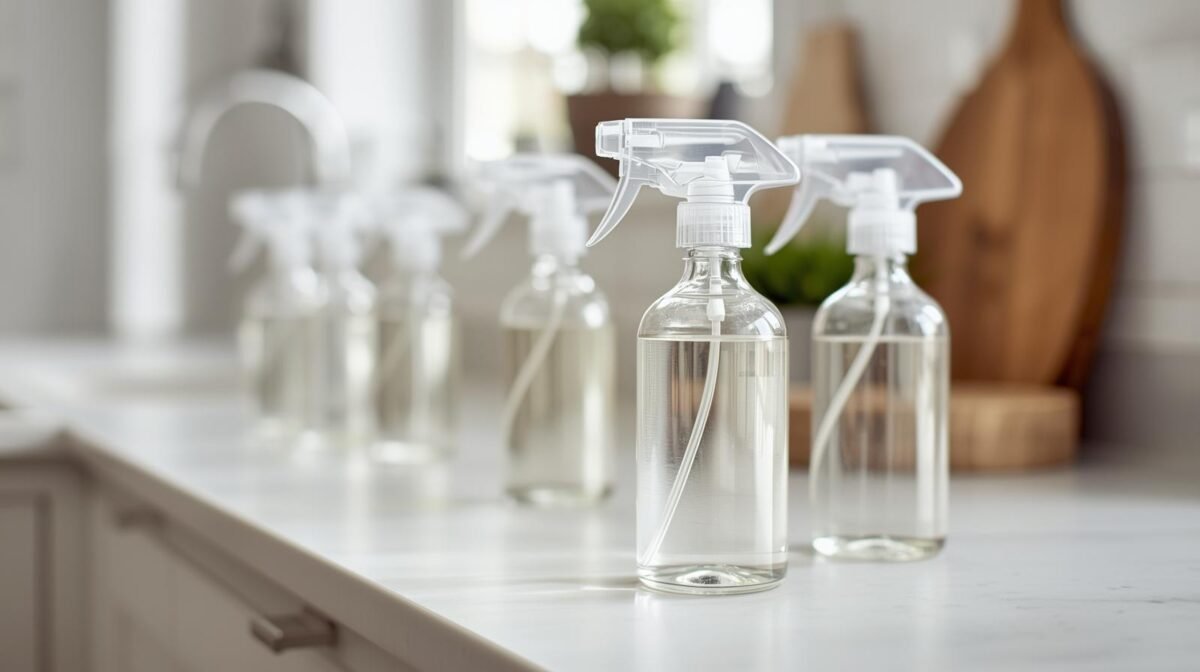
This is the workhorse of our cleaning routine — counters, stovetop, bathroom surfaces, kid messes. We keep it simple with a few refillable blue glass spray bottles and rotate between:
- Azure Standard All-Purpose Spray — Our primary go-to. Clean ingredient list, reliable performance, and they’re a co-op model we feel good supporting.
- Puracy Multi-Surface Cleaner — Our backup and occasional swap. Plant-based surfactants, no synthetic fragrance, and easy to find.
- Refillable Blue Glass Spray Bottles — Simple Amazon find. We fill them ourselves and use them for everything.
- Edens Garden Essential Oils — Occasionally added to sprays for a light, natural scent. We like their GC/MS testing transparency.
We’re not committed to any single all-purpose brand. We prioritize performance and ingredients — and we’ll switch if something better comes along.
Disinfecting Support: Briotech
This one surprises people. Briotech is powered by hypochlorous acid (HOCl) — a compound your own immune system produces naturally to fight pathogens. It’s been used in medical and wound care settings for over a century, and it’s EPA-registered to eliminate 99.99% of bacteria and viruses, including SARS-CoV-2.
It contains just two ingredients: salt and water (processed to produce pure HOCl). No fragrance, no alcohol, no harsh residue. It’s safe on food-contact surfaces, safe around kids and pets, and it doesn’t smell like chemicals.
We use it on high-touch surfaces, in the bathroom, and anywhere we want real disinfecting power without the exposure concerns of quats or bleach.
Would we repurchase from Briotech? Absolutely. This one is a permanent fixture.
Laundry
Laundry is one of the highest daily skin exposure categories in your home. You wear your laundry products all day. They stay on your sheets all night. For us, fragrance sensitivity and ingredient transparency were the two biggest motivators to switch.
We stopped using Tide and Downy years ago — both were causing skin irritation and the synthetic fragrance was relentless. Here’s what replaced them:
- Truly Free Laundry Detergent — Our current primary detergent. Plant-based, fragrance-free, concentrated, and refillable. Consistent performance across all our loads.
- Elements Laundry Detergent — A solid rotation option. Vinegar-powered, simple ingredient list, easy to find at most stores.
We’ve simplified our laundry routine quite a bit — you can read the full breakdown here.
Dishes & Dishwasher
Our dish setup is simple. We moved away from Dawn (skin irritation) and Jet Dry (fragrance and ingredient concerns) and landed on a combination that works well for our household:
- Azure Standard Dish Soap — Our primary hand dish soap. Clean formula, performs well.
- Attitude Dish Soap — A reliable backup when Azure isn’t available. Plant-based, no artificial fragrance.
- Azure Standard Dishwasher Soap— Works well in our machine. Clean results, simple ingredients.
- 365 by Whole Foods Rinse Aid — Replaced Jet Dry for us. Does the job without the fragrance.
If you’re looking specifically for dishwasher options, I break down the best non-toxic dishwasher detergents here.
Deep Cleaning & Specialty Products
These are the targeted cleaners that fill the gaps in our routine:
- Bon Ami Powder Cleanser — Old-school and simple. No fragrance, minimal ingredients, excellent for sinks and tubs. One of the most straightforward products on this list.
- Biokleen Bac-Out Enzyme Cleaner — Our go-to for organic stains and pet messes. Enzyme-based cleaners break down the biological material rather than just masking it, which means they actually work instead of just covering odors.
- Azure Standard Floor Cleaner — What we currently use on our hard floors. Clean, simple, effective.
- Azure Standard and Edens Garden Essential Oils — For homemade surface blends when we want a light, natural scent.
Products We Stopped Using (And Honestly Don’t Miss)
This section matters because real trust is built on honesty — not just a list of things to buy. Here’s what we replaced and why:
- Tide — Skin sensitivity and fragrance. After switching, the irritation stopped. That told us everything we needed to know.
- Downy — Same issue. The artificial fragrance lingers on fabric for days and we found it overwhelming once we stopped being used to it.
- Dawn Dish Soap — Harsh on skin with daily use. We wanted something gentler for hands we wash frequently.
- Jet Dry — Ingredient concerns and fragrance we didn’t need on our dishes.
- Febreze — Synthetic fragrance masking odors rather than removing them. We’d rather deal with the source.
- Lysol Sprays — Strong chemical exposure in an enclosed space. Briotech replaced this role entirely — with better science behind it.
We didn’t throw everything out at once. We replaced products as they ran out, one category at a time. That’s the most sustainable way to do this — financially and mentally.
How We Keep It Simple
The goal was never to collect 25 specialty products. Here’s our actual rotation on any given week:
- One all-purpose spray (Azure or Puracy)
- One disinfecting solution (Briotech)
- One floor cleaner (Azure)
- One dish soap + dishwasher system (Azure)
- One laundry detergent (Truly Free primary)
- One enzyme cleaner for messes (Bac-Out)
- One abrasive powder for deep scrubbing (Bon Ami)
That’s it. Seven categories. The simplicity is intentional — fewer products means lower cost, less storage, and fewer ingredients making their way into your home’s air and surfaces.
If you’re looking for a full breakdown of what we use and what we’ve changed, you can read our low-toxin laundry routine here.
Where We Buy Everything
We don’t have one single source for everything, and that’s by choice. Here’s how we think about it:
- Amazon — Convenience and price comparison. Many products are easier to find and often cheaper here, especially with Subscribe & Save.
- Azure Standard — For bulk and their own brand products. If you’re not familiar with Azure, it’s a co-op model that ships to drop points around the country. Worth exploring if you buy in quantity.
- Direct brand websites — For brands with subscription/refill programs, buying direct often saves money long-term. Truly Free is a good example.
I always compare pricing before buying. The links throughout this post are affiliate links, which means I earn a small commission if you purchase — at no extra cost to you. I only recommend products we actually use.
Final Thoughts
You don’t need to overhaul your entire cleaning cabinet this week. You don’t need to panic about what’s under your sink right now.
Start with the products you use most and replace them first. For most households, that’s laundry detergent, all-purpose spray, and dish soap. Those three account for the majority of your household’s daily chemical exposure.
Swap as things run out. Keep what works. Be honest about what doesn’t.
That’s the Practical Haven approach — not perfection, just better defaults over time.